
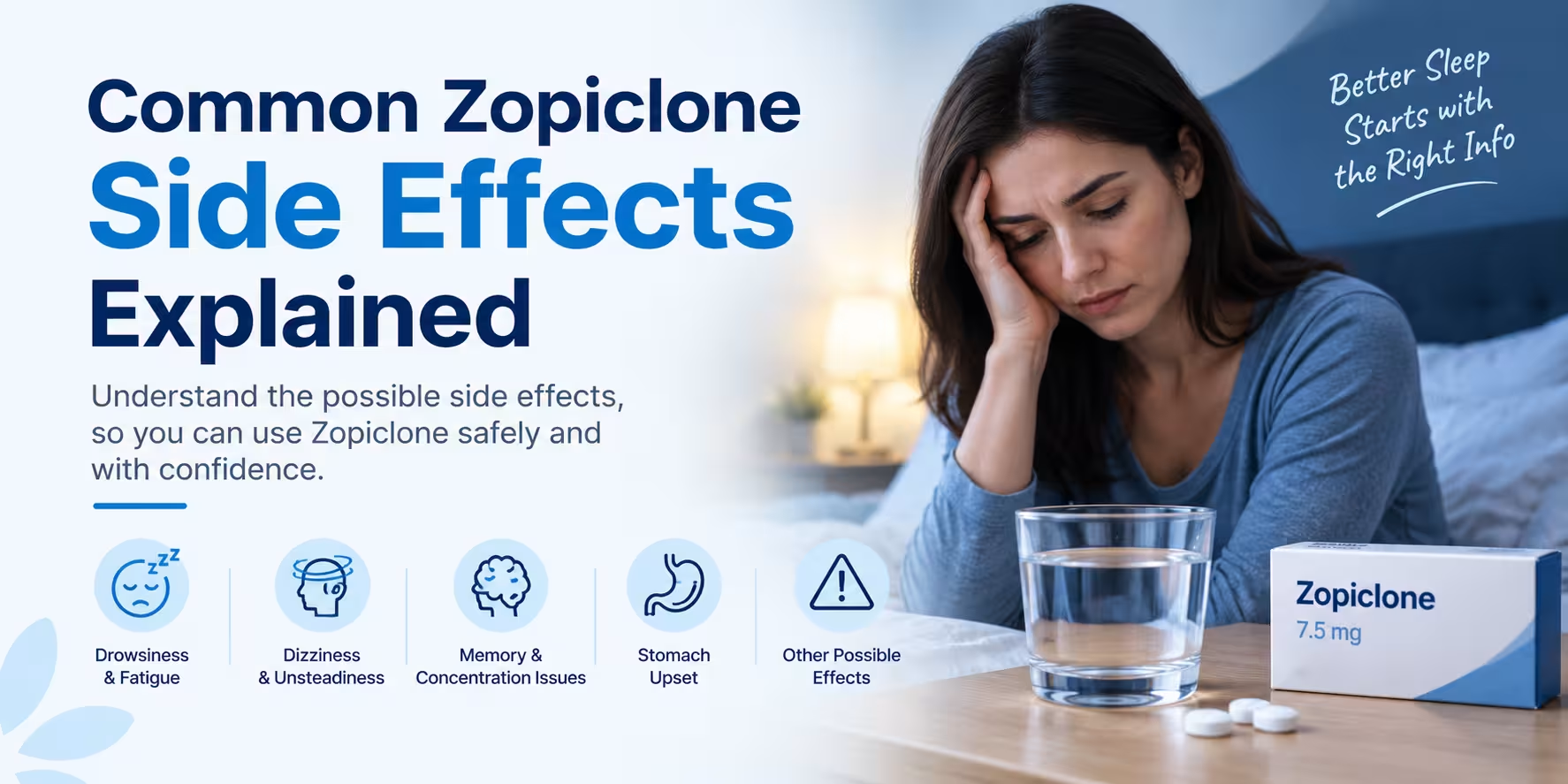
Zopiclone is the medicine prescribed for the short-term treatment of insomnia, but like all medications, it may also cause some side effects. Every person experiences different zopiclone side effects, and they may vary based on age, dose, overall health, alcohol use, and other medicines being taken. Read our detailed explanation guide to zopiclone to understand its uses, safety, dosage, and precautions. A doctor or pharmacist helps to assess whether the symptom is likely to be related to zopiclone and whether treatment requires review.
The Most Common Side Effect: Metallic or Bitter Taste
The most common side effect of zopiclone is a metallic or bitter taste in the mouth. These side effects are often noticeable in the morning after taking it. It is harmless but unpleasant. Staying hydrated and brushing your teeth after waking helps to reduce the intensity.
Other Common Side Effects
Some of the common zopiclone side effects are
- Mild headache
- Nausea
- Dry mouth
- Drowsiness or grogginess the next day
- Dizziness or unsteadiness
It can become more noticeable at higher doses or if the medication is not paired with a full night’s sleep. You should understand how this medication should be taken to avoid side effects.
Less Common but Notable Side Effects
Some people experience the less frequent side effects but need to be aware of them.
- Coordination problems
- Memory lapses or confusion, especially in older adults
- Mood changes, including low mood or irritability
- Vivid or unusual dreams
These are less common side effects but should be reported to your doctor if they occur, especially if they affect your daily functioning. Learn more about when taking zopiclone safely.
When to Contact Your Doctor
Most zopiclone side effects are manageable, but some symptoms require prompt medical assessment. Here are the situations when you need doctor attention.
- Severe allergic reactions (rash, swelling, difficulty breathing)
- Significant confusion or memory loss
- Signs of dependence, such as higher doses for the same effect
- Persistent side effects that do not improve after a few days
People who are using zopiclone regularly should not stop or change the treatment without advice, especially after long use. Read more about zopiclone dependence here to understand why doctors keep treatment short and may review how it is stopped.
Tips to Minimize Side Effects
Here are the tips to follow to reduce the side effects of zopiclone.
- Take the medicine only when you commit to a full night’s sleep
- Avoid taking alcohol while using zopiclone
- Don’t increase the prescribed dose
- Report the unusual symptoms to your doctor instead of waiting
Conclusion
The zopiclone side effects cause drowsiness, unpleasant taste, dry mouth, headache, and dizziness. Many of the side effects are mild, and others are serious and require prompt medical attention. Take the medication exactly as prescribed and get enough sleep to reduce the risk of unwanted side effects. Talk to a doctor if side effects still persist or concern you.
Last Reviewed: 12 September 2026
Next Review Due: September 2027